New Here? Enjoy 10% Off Your First Order. WELCOME10
Free Shipping Worldwide DETAILS...
Extra 50% Off Sale Styles
New Here? Enjoy 10% Off Your First Order. WELCOME10
Free Shipping Worldwide DETAILS...
Extra 50% Off Sale Styles
From leather jackets to linen dresses, denim coats to knitwear — everything we make at Dayhawks carries a responsibility. Responsibility to the people who wear it, the people who make it, and the planet that supplies it.
"We design for identity, elegance, and power — and we refuse to build that on an unsustainable foundation."— Dayhawks & Co.
Dayhawks is a fashion house and a leather manufacturer. That dual identity gives us a rare advantage: we control the process from raw material sourcing all the way to the finished garment on your back. That means we also carry full responsibility for what happens in between.
Our collections span womenswear and menswear — suits, coats, dresses, jackets, knitwear, denim, shirts, and accessories. Each category brings its own sustainability challenges, and we take each one seriously on its own terms. There is no single answer that covers everything. So we have built a framework specific to every part of what we do.
This page is not a manifesto of perfection. It is an honest, category-by-category account of where we stand, what we are committed to, and where we still have work to do. We believe the fashion industry's first obligation is honesty — so that is where we start.
Dayhawks manufactures premium leather outerwear, jackets, and accessories. Every hide we use is a by-product of the food industry — sourced, tanned, and crafted under verified standards.
All leather comes from bovine, ovine, and caprine hides that are by-products of the food industry. No animal is bred or slaughtered for its skin alone. We source exclusively from certified food-processing facilities with traceable regional origin documentation.
Our preferred method is vegetable tanning using natural bark extracts — bark, chestnut, mimosa. Where chrome tanning is required for performance leathers, we exclusively partner with LWG Gold-rated tanneries using closed-loop chrome recovery achieving 98%+ reuse, fully ZDHC MRSL compliant.
Leather tanning is water-intensive. Our tannery partners operate drum-cycle reduction, grey water recycling, and full effluent treatment plants. We target and achieve up to 60% water reduction versus the unaudited industry average across our supply chain.
Every hide is digitally mapped via CAD optimisation before a single cut is made. This maximises yield and minimises offcuts. Offcuts above 10cm² are retained for belts, gloves, and accessory trimmings. Smaller shavings go to composting or biomass energy partners.
All Dayhawks leather pieces use full-grain or top-grain leather, solid brass hardware, waxed linen or bonded nylon stitching rated for 50+ years, and hand-stitched linings. Durability is our primary sustainability statement — a jacket worn for 30 years generates a fraction of the footprint of synthetic alternatives replaced every two.
Every Dayhawks leather piece qualifies for our lifetime repair programme. We re-stitch, re-dye, replace linings, and restore hardware. Leather that is too worn to wear can be returned for responsible recycling or repurposing into offcut accessories — keeping material in use and out of landfill.
Our sustainability approach varies by category because the challenges are genuinely different. Here is how we handle each part of our range — from suits to denim, knitwear to accessories.
Our tailored suits — from feminine western cuts to structured office silhouettes — are constructed using premium interlinings, shape-retaining canvases, and precision-stitched seams built for years of wear. We design suits to be enduring wardrobe investments, not seasonal throwaway pieces.
Fabrics are selected from mills with verified environmental credentials. Where wool is used, we source from RWS-certified (Responsible Wool Standard) supply chains. Our suit linings use OEKO-TEX® certified materials — free from harmful substances — and are fully replaceable as part of our repair service.
Our coats and non-leather jackets — including cotton/lyocell blends, wool coats, and denim outerwear — are designed for seasonal durability and cross-wardrobe versatility. Classic cuts and neutral palettes mean pieces integrate into wardrobes for multiple years, reducing the frequency of replacement.
Insulation where required uses recycled polyester fill. Outer shell fabrics are selected for dye fastness and colourfastness ratings of 4–5 (ISO standard), minimising dye runoff in the wash cycle. Hardware is solid metal — no decorative zinc alloy or coated buttons that degrade and chip.
Denim is one of fashion's most resource-intensive materials. We acknowledge that and work to address it at every stage. Our denim is sourced from mills operating water-reduction programmes, and wherever possible we use stone-washed finishes achieved through enzymatic washing rather than traditional pumice stone, which generates abrasive waste and excess water use.
Our knitwear — fine-knit V-necks, casual jumpers, and layering pieces — is made from natural and low-impact fibre blends. We test all knitwear for pilling and wash stability to ensure pieces that maintain their appearance and stay in rotation for years.
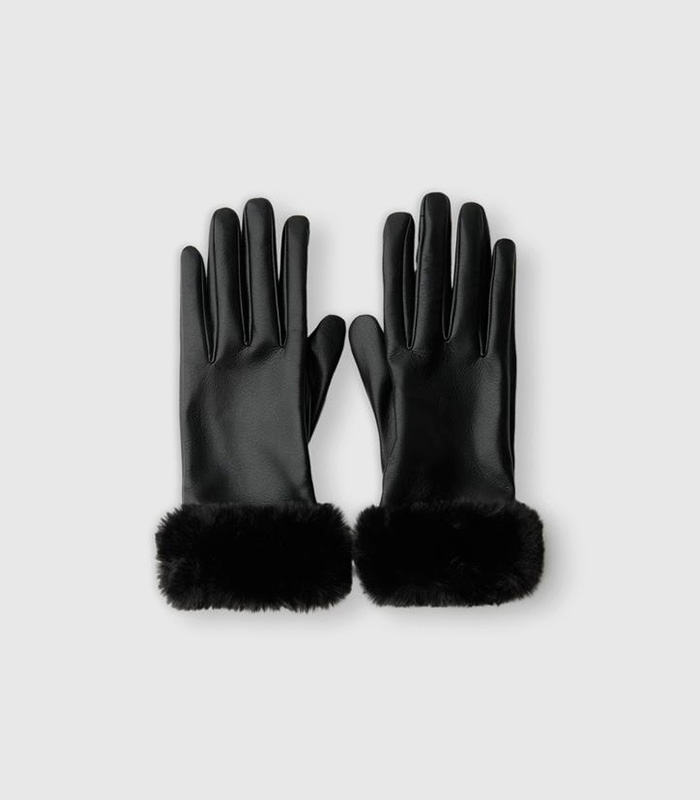
Accessories at Dayhawks — belts, gloves, scarves, and small leather goods — are either manufactured from leather offcuts from our main production runs, or from natural fibres. Using offcuts for accessories is one of our most effective zero-waste strategies: material that would otherwise be discarded becomes a finished product.
Scarves and fabric accessories are woven from natural fibres (wool, cotton, linen) with OEKO-TEX® Standard 100 certification. Gloves use leather sourced from the same audited, traceable supply chain as our main leather range.
Every material we use is selected against criteria of longevity, environmental performance, and supply chain traceability. Here is where each key material stands.
By-product sourced, LWG-certified tanneries, vegetable or controlled chrome tanning. Biodegradable, repairable, 30+ year lifespan. Our strongest sustainability story.
RWS (Responsible Wool Standard) certified supply chains. Natural fibre with strong biodegradability, thermoregulatory properties, and long wear life that reduces replacement frequency.
Sourced from GOTS-certified (Global Organic Textile Standard) suppliers. No toxic pesticides, reduced water use versus conventional cotton. Key material for our women's and teen ranges.
Sourced from water-responsible mills. Enzymatic washing finishes. Natural and low-impact indigo dyes. Tested for wash-fastness and pilling resistance to ensure maximum product lifespan.
Produced in a closed-loop solvent process, recovering 99%+ of chemicals for reuse. Biodegradable, soft against skin, lower environmental impact than viscose. Used in our cotton/lyocell blended outerwear.
Linen is one of the most naturally sustainable fibres — grown without irrigation or pesticides in most European climates, fully biodegradable, and extraordinarily durable with age. Used in our lighter seasonal pieces.
The last thing we want is for a responsibly made garment to arrive in irresponsible packaging. Every element of our dispatch has been redesigned from scratch.
All outer packaging uses 100% recycled kraft board from FSC-certified sources. Boxes are fully recyclable at standard household kerbside collection. No laminated or foil-printed boxes — these contaminate recycling streams.
We have eliminated single-use plastic polybags entirely across all product categories — apparel, leather, and accessories. No exceptions. This change was completed across our full range in 2024.
Every leather piece and premium garment arrives in an unbleached cotton muslin storage bag. This replaces the polybag entirely and becomes a long-term storage solution for the customer — designed to be kept and reused for decades.
Product care labels and tags are stamped on leather offcuts from our production runs. No virgin paper hang tags with plastic fasteners. Even our smallest packaging component closes the loop on material waste.
We hold ourselves to internationally recognised third-party standards across leather, textiles, chemicals, and packaging — verified by annual independent audits.
Gold-rated tannery partners audited annually for water, energy, waste, and chemical management. The leather industry's highest environmental standard.
All chemicals across leather tanning and textile dyeing verified against ZDHC MRSL at gateway-verified level. No hazardous substances discharged into waterways.
Applied to all fabric linings, knitwear, and accessory textiles. Certifies that every component of a garment is free from harmful substances — tested for 100+ substances.
Wool used in our suits, coats, and knitwear is sourced from RWS-certified farms practising responsible land management and animal welfare standards.
All finished products comply with EU REACH. AZO dyes, formaldehyde, and heavy metals tested to EN ISO standards across our full apparel and leather range.
Cotton used in our shirts, tops, and dresses sourced from GOTS-certified suppliers — verified organic agriculture, no toxic pesticides, fair labour throughout.
All paper packaging, tissue wraps, and printed inserts sourced from FSC-certified or recycled sources. Zero virgin pulp from high-conservation-value forests.
All manufacturing facilities audited against SMETA standards covering labour rights, health & safety, environment, and business ethics. Audits conducted annually.
Environmental responsibility without social responsibility is incomplete. We hold ourselves to the same standard of care for the people who make our clothes as for the materials they use.
We pay at or above the living wage benchmark in every country we manufacture. Wages are benchmarked annually against the Fair Wage Network's country-level data. No piece-rate systems that incentivise speed over quality, safety, or wellbeing.
Every manufacturing facility — both apparel and leather — is audited annually under SMETA standards. Tannery workers handling chemicals receive full PPE provision, chemical safety training, and scheduled occupational health assessments. Fire safety and building integrity checks are mandatory.
Dayhawks actively funds traditional craftsmanship training — hand-stitching, edge painting, pattern cutting, and leather saddle-stitch techniques. We partner with artisan workshops to run apprenticeship programmes, preserving skills at risk of being lost to industrial automation.
The majority of our garment manufacturing workforce is women. We prioritise partners that provide management pathways, maternity rights, and safe working environments for female workers. Gender equity in the supply chain is a supplier selection criterion, not an afterthought.
We publish the names and locations of our tier-1 manufacturing partners — tanneries, garment facilities, and finishing workshops. Annual third-party audit scores are made available on our Manufacturing & Global Export page. Hidden supply chains enable exploitation; transparency prevents it.
Dayhawks has zero tolerance for forced labour, bonded labour, or child labour at any tier of our supply chain. This is a non-negotiable condition of all supplier contracts and is verified through both SMETA audits and direct facility visits conducted by our sourcing team.
Every target below has a date attached and a person responsible internally. We publish them here so you can hold us to account.
Transitioned all leather supply to Leather Working Group Silver+ audited tanneries. Full tannery disclosure published on Manufacturing page.
Eliminated all single-use plastic polybags from leather, apparel, and accessories dispatch. Replaced with cotton muslin and recycled kraft across the full range.
Currently at 84% diversion via accessory reuse, composting, and biomass energy. Target 100% diversion by Q4 2025.
Transitioning all cotton used in shirts, tops, and dresses to GOTS-certified organic supply chains. Currently sourcing audit underway for full-range transition.
Publishing names, locations, and audit scores for all tier-2 suppliers — chemical manufacturers, hardware, thread producers, and fabric mills — across leather and apparel.
Full scope 1, 2, and 3 carbon footprint calculation across all product categories, verified by independent environmental consultant and made publicly available.
Transitioning at least half the leather range to vegetable and aldehyde-free tanning methods, beginning with heritage and lifestyle jacket lines in 2026.
At Dayhawks, we believe the most powerful statement a fashion brand can make is not on the runway — it is in the choices made in the supply chain, the tannery, and the factory floor. This page is not marketing. Every claim here is backed by a supplier contract, a certification number, or a third-party audit result. If we fall short of a target, we will say so publicly and publish a revised plan. That is the standard we hold ourselves to — and the one you deserve.
— The Dayhawks & Co. Team